May 18, 2017

Gasland: Tales from a Modern Dystopian Wasteland

Image result for gasland


The following is a film report I recently wrote for a geography class, Contemporary Issues in Environmental Studies.  

Film Title: Gasland
Year: 2010
Length: 1 hr 47 min

            When viewing the documentary Gasland you might feel as if you are looking into a dystopian alternate reality.  Undrinkable tap water that comes out brown and can be lit on fire by a lighter, animals losing their fur and dying, families barely able to cope with near constant illness, and cover ups and denial by corporations profiting from exploitation of the land.  These are just some of the shocking sights you’ll see in the film.  But the most shocking fact is that it is not dystopian fiction you’re watching, but actual scenes from rural America.   
            The film, directed, starring, and largely shot by Josh Fox, follows the filmmaker’s journey through what he calls Gasland, portions of the United States where natural gas drilling, and in particular of hydraulic fracturing (or “fracking” – the process of injecting liquids to break up rock formations to obtain fuel), is prevalent.  The story begins after Fox receives a letter from a natural gas company offering him nearly 100,000 dollars to lease his land in Pennsylvania for drilling.  Skeptical of what he may be getting in to, he investigates areas near him where fracking is already taking place, and to his horror discovers families whose drinking water has begun to look and taste strange, with some even claiming that they can light theirs on fire.  This prompts a journey to areas in mid-America, including Colorado, Wyoming, and Texas, where fracking is undergoing a boom, to document the negative effects on health and the environment of the practice.  Fox chronicles numerous horrifying examples of contaminated drinking water, sickness, polluted natural areas, and disgruntled landowners.  The film concludes with a visit to congressional subcommittee hearing where a bill to repeal exemptions for fracking in the Safe Drinking Water Act is being considered.  Here we see natural gas representatives blatantly denying any significant harm to the environment or human health from fracking (Gasland, 2010).
            The strength of Gasland as a film lies largely in its shock value and emotional tug.  Unlike many other environmental documentaries that use fact after fact, and carefully placed interviews and animated diagrams to build a case , the film takes the viewer deep into the trenches by showing firsthand the real life problems that are taking place.  But herein also lies its greatest weakness.  Any detractor of the film can easily comment that the incidences it showcases are extreme examples or have not been proven to be linked to fracking.  In fact, it’s hard not to be at least somewhat skeptical with the radically bleak portrait Fox paints of life in the land he calls Gasland.
            So how accurate, really, are the implications of the film?  Not surprisingly, natural gas companies have denied its credibility outright.  Due to the film’s breakout success, many companies publically criticized it, and a short, industry-backed documentary called Truthland was even produced to rebut its truthfulness (Fang, 2013).  However, studies on the impacts of fracking show that the danger is very much real. 
            Probably the risk of fracking that Gasland relies on most to build its case is contamination of drinking water.  Though fracking companies may consistently deny the danger of this happening, a comprehensive report on the impacts of fracking on drinking water resources in the US released by the EPA in 2016 found that a variety of factors in the fracking process can potentially and have been found in some cases to impact the quality of drinking water, ranging in severity from “temporary changes in water quality to contamination that made private drinking water wells unusable” (United States, 2016: 2).  These factors, in which fracking fluid or waste was found to lead to contamination of drinking water, included many of the ones suggested in the film, including spills, leaks from wells, and discharge into surface waters (United States, 2016).  So fracking without a doubt poses at least some risk to drinking water, and thus human health. 
            Another major implication of the film, though receiving much less focus, is the effect of fracking on wildlife.  Fox meets one woman who says she has found dead animals near a fracking well and has frozen them as evidence.  Animals dropping dead around fracking areas is certainly alarming, but does it really happen?  One recent study of the biotic impacts of fracking related energy development found that although there is significant gaps in research on these effects, there are significant threats to wildlife including surface and groundwater contamination, air pollution, and habitat loss (Souther et al., 2014).  This provides just more evidence for the possibility of serious negative impacts of fracking.
            The possibility of negative impacts on the environment is probably not surprising to most people.  The shocking thing that Gasland seems to imply is just how frequent and severe these impacts are.  Here the scientific consensus is less clear.  Both of the studies mentioned above call for further research to better understand the overall impacts of fracking.  According the EPA report, “significant data gaps and uncertainties in the available data” prevented broad estimations of frequency and severity of impacts (United States, 2016: 2).  So in other words, we can’t say for sure.  At very least then, Fox’s implications cannot be fully proven, and it’s probably also safe to say that his dystopian portrait of fracking areas is an intentional exaggeration meant to shock the viewer into alarm.  Sure, the individual cases he looks at could be legitimate, but are the effects as severe and widespread as the film implies?  Probably not, or else the US would have a major national crisis on its hands.
            This is where Gasland finds its weakest footing.  However, this doesn’t mean that we shouldn’t treat the film as the wakeup call it’s meant to be.  It’s not surprising that studies are expressing uncertainty about negative impacts of fracking.  After all, it’s always the role of the scientist to err on the side of caution. What we should be concerned about is that these studies warn that there are serious impacts attached to fracking that could legitimately occur.  Sometimes we don’t need to wait for absolute conformation.  Gasland takes these serious risks and translates them into a riveting narrative that’s accessible for the average viewer. 
            The film, in fact, barely scratches the surface of the legitimate problems with fracking.  Fox sticks pretty close to the issue of environmental contamination of nearby areas.  He doesn’t even touch on the economic issues with the boom and bust cycle, dangers to well workers, physical degradation of the land, or the much larger problem of fracking’s contribution to climate change.  Perhaps a more conventional documentary could have incorporated all these factors.  Gasland, however, has no intention of being conventional, or even entirely accurate.  Its aim is more like that of a thriller set in a dystopian future, a cautionary tale of what could be if the worst of humanity is seen through that will shake you to your bones.  At this it excels.              


Bibliography

Gasland. Directed by Josh Fox. USA: HBO Documentary Films, 2010. DVD.

Fang, Lee. "The Fracking Industry's Dishonest Response to 'Gasland'" The Nation. November           18, 2013. Accessed April 11, 2017.

Souther, Sara , Morgan W. Tingly, Viorel D. Propescu, David TS Hayman, Maureen E. Ryan,           Tabitha A. Graves, Brett Hartyl, and Kimberly Terrell. "Biotic impacts of energy development from shale: research priorities and knowledge gaps." Frontiers in Ecology and the Environment 12, no. 6 (August 1, 2014): 330-38. Accessed April 12, 2017. doi:10.1890/130324.

United States. United States Environmental Protection Agency. Office of Research and       Development. Hydraulic fracturing for oil and gas: impacts from the hydraulic fracturing    water cycle on drinking water resources in the United States: Executive Summary. Washington, DC. Accessed April 11, 2017. United States Environmental Protection Agency.


April 28, 2017

It's Time for SIU to Divest and Become a Leader in Fighting Climate Change

Image result for siu power plant

In honor of the People's Climate March happening in cities around the world today, the following is a long form letter I wrote to my school newspaper that was published in February calling for the university to take action in response to the climate crisis.  I wrote the piece on behalf of a student environmental organization I'm a part of  that has been waging a campaign for the past few years to get the school to divest the money it has invested in fossil fuel companies.  We had just recently achieved a milestone by passing a resolution of support through the Undergraduate Student Government and I saw the opportunity to remind the campus community of our campaign, as well as call for other actions the university should be taking especially in light of  the recent election of Donald Trump as president.  The published version of the letter on the newspaper's website can be found here: HTTP://DAILYEGYPTIAN.COM/X9HUY 

            When former United Nations Secretary-General Ban Ki-moon visited campus in December he spoke about the need for governments, ordinary citizens, and institutions like universities to all help lead the way in tackling one of the greatest problems of our day: global climate change.  He even left us with a challenge.  “Even in the universities, there are many areas where you can make sure you don’t make greenhouse gas emissions and you use sustainable energy. Can you promise?” he asked.
            In addition to the historic achievement of bringing a U.N. Secretary General to speak on campus, it was announced the same day that SIU would join the United Nations Academic Impact Program, a program that gives academic institutions the opportunity to work in association with the U.N. to develop projects that uphold the organization’s sustainable and humanitarian values.  The U.N. has for years been at the forefront of the international effort to combat climate change.  During Ban Ki-moon’s tenure as Secretary General he made this one of his core objectives, and helped lead the way to the historic passing of the Paris Climate Agreement in 2015, which brought 194 nations together to agree upon taking action to combat climate change through the limitation of greenhouse gas emissions.  Now, if SIU truly supports these values, we must ask ourselves: are we doing as much as we can as a university to contribute to the fight against climate change?
            Certainly, this question is now more important than ever.  With 2016 now recognized as the hottest year on record and 16 of the top 17 warmest years having occurred since 2000, there’s no room for doubt that our climate is changing; and at least 97% of climate scientists agree that it’s extremely likely due to human activity.  Incredibly, Donald Trump, our now supposed president, has consistently put into doubt this widely agreed upon concept, and plans to push us backwards in the fight by slashing emissions regulations and pressing for further development of fossil fuel use.  He has even stated an intention to withdraw the United Sates from the Paris Agreement, which would hugely undermine international efforts to tackle climate change.
            We find ourselves now at an incredibly dangerous point in history.  With a president who represents a legitimate threat to human rights, international relations, and the environment, and our climate quickly reaching a point of global catastrophe, SIU must stand up for the ideals that will protect its students and the world at large.  This will require more than simply stating support for values like diversity and sustainability.  It’ll require proactive action that directly works to defend these and other values, as well as to progress us in the battle for change.  This is why S.E.N.S.E. is calling on SIU to take up a leading role in the movement to solve the climate change crisis.        
            SIU, in fact, already has a strong history of pro-environment initiatives.  The Green Fee, which each year is used to fund sustainable projects around campus, is one such example and has led to countless impressive actions since its establishment in 2009 after a student-led campaign.  We should also be commended for the many recognitions we’ve received for environmentally friendly efforts such as our consistent inclusion in The Princeton Review’s “Green Schools” guide and last year’s designation of SIUC as a “Bicycle Friendly University” by the League of American Bicyclists.  There is much credit that should be given to the students, faculty, and staff who have worked tirelessly to make our university as environmentally friendly as it is.   
            But, for all the many ways SIU excels in sustainability, we unfortunately still lag sorely behind in others.  Take the Power Plant on the Carbondale campus, the towering eye-sore that many of us groan about under our breaths but is rarely brought into legitimate conversation.  It’s time to start that conversation.  While the plant is burning nearly 50,000 tons of coal per year to help provide heating, cooling, and electricity to the campus it’s also contributing to climate change, polluting our air, and serving as a symbol to all those who know or visit SIU that we’re stuck in the dirty past of fossil fuels.  Also brought into conversation should be the research into fossil fuel technology that takes place at SIU.  Many of these technologies, such as advanced coal (another name for so-called “clean coal”), are only furthering development of a dying industry that’s wrecking the planet, while putting off the renewable energy development we really need.  In addition to all this, we’ve confirmed that SIU actively invests in fossil fuel companies through mutual and index funds that include fossil fuel stocks.  It’s hard to say we support action on fighting climate change when we ourselves are both funding and profiting from the industry that’s most responsible for it.          
            That brings us to our first challenge for SIU.  Roughly three years ago our organization kicked off a campaign, in solidarity with a growing number of similar ones at colleges and universities around the world, asking SIUC to halt all new and remove all current investments in fossil fuel companies and to reinvest that money in sustainable solutions.  In spring 2015 we passed a resolution through the Graduate and Professional Student Council which acknowledged their support for our campaign.  Now, as of late November of last year, the Undergraduate Student Government has passed a similar resolution we created for them saying they support SIU cutting their investments in fossil fuel companies.  We believe this is a milestone that the administration cannot ignore.  With the governing powers representing both the graduate and undergraduate student bodies now supporting us, we can now say that the students have spoken and our message is that we are concerned about the damage being done to our planet by the continual use of fossil fuels and we’d like to see SIU act in response to this. 
            Since our campaign was established, the fossil fuel divestment movement has grown substantially around the world.  A report published by Arabella Advisors in December of last year found that to date, 688 institutions and over 50,000 individuals, representing a combined value of over five trillion dollars in investments, have committed to ending their investments in fossil fuels in some way.  In the year since the passing of the Paris Climate Agreement alone, this value represented by divesting institutions and individuals nearly doubled.  Many of the institutions making divestment commitments have been colleges and universities, however the movement has now expanded to faith-based organizations, philanthropic foundations, governments, and many other types of groups. 
            The fact is that people and institutions are now finding fossil fuel companies to be undesirable investments.  There are three primary reasons for this, and these represent the primary reasons why we are calling on SIUC to take similar action. 
            First, investing in these companies is morally problematic.  The use of fossil fuels for energy and fuel is the number one cause of climate change.  Their continued use is fueling such increasing catastrophes as rising temperatures, melting of the polar ice caps, rising seas, more severe storms, and increasing droughts and flooding; all of which are incredibly destructive to both humans and other species.  In addition, fossil fuel use is the cause of many other environmental problems from oil spills to air pollution and land degredation.  Of course we need them now to provide for many of society’s needs, but there are better alternatives already available that we need to be working towards and most fossil fuel companies seem to just be determined to soak as much profit as they can out of their remaining reserves instead of embracing the need for change. Because of this, holding stock in fossil companies is increasingly being seen as something that investors would rather not be involved with.
            Second, investments in fossil fuel companies are increasingly being seen as financially risky and unsustainable. As stated before, the fossil fuel industry is in terminal decline.  Coal, oil, and natural gas companies have been slowly running out of easily extractable reserves and turning to harder to obtain and dirtier sources.  These companies are fated for a slow decline at best, while renewable energy is rapidly on the rise and is a much smarter long term investment.  Additionally, with the rollout of emissions regulations around the world as governments attempt to slow the progress of climate change, fossil fuel companies will be increasingly hindered and much of their reserves will be forced to remain in the ground.  This idea is known as the “carbon bubble”, and predicts that fossil fuel assets will become increasingly worthless as companies are met with increased pressure to slow production to meet emissions goals.  It’s been estimated that in order to keep global temperatures from rising more than two degrees Celsius above pre-industrial levels, as is the goal for an upper limit hailed by scientists and agreed upon in the Paris Agreement, 80% of fossil fuel reserves will have to remain unburned.  If we even come close to keeping this promise then fossil fuel investments will dramatically lose their value in the not-too-distant future. 
            We understand that SIU is going through a period of deep financial difficulty at the moment and that a significant change in our investment strategies could be somewhat risky.  However, we know that divesting from fossil fuels will be beneficial in the long term, at the very least.  In addition, a public statement like this would likely bring SIU positive attention, and with it increased interest from prospective students.  And most importantly, the time to act against climate change is now.  If we wait until SIU is doing well financially it could be years and the opportunity to make a difference will have been missed. 
            Lastly, and the biggest argument for cutting fossil fuel investments, is that divesting from a particular industry is a powerful statement.  If well publicized, SIU halting and removing their investments in fossil fuel companies and reinvesting in clean solutions would send a clear signal to all those in the region and beyond that we believe in a safe future for all living things and that the solution is clean, renewable energy not fossil fuels.  It’s hard to make an impact when one person or small group of people speaks up, but when an entire institution, and especially a well regarded public research university like SIU, speaks up it can amplify that message and have a real chance of shaping public opinion and policy.  Shifting funds away from fossil fuel companies and to renewable energy companies has an economic impact as well, encouraging development of the right companies that will help power a sustainable future.  
            With these reasons in mind, we renew our call, now supported by the governing powers of the entire student body, for SIU to change the way we invest so as to take a real stand against environmental injustice and for the future of our planet.  We ask SIUC to:
1.      Immediately commit to an indefinite halt to all new investments in fossil fuel companies, including both direct investments and commingled assets that include fossil fuel companies.
2.      Divest any current holdings in fossil fuel companies or in commingled assets that include fossil fuel companies within an aggressive timeframe, preferably five years or less.
3.      Reinvest all divested funds into renewable energy companies, investments, or research into renewable energy production.
            If none of these are reasonably possible (which we strongly feel they are), we at least ask SIUC to commit to reassessing our investment strategies to reflect the urgent need for shifting support away from fossil fuel development to clean, renewable energy development.  We plan to continue and grow our campaign until these demands are satisfactorily met.   
            But, as indicated earlier, divestment from fossil fuels is only a small piece of the changes and initiatives that we believe could truly place SIU as a leader in sustainability and the fight against climate change.  That’s why we’re encouraging SIU to go beyond divestment and actively work to uphold these ideals in all facets of the university’s operation.  This means beginning plans to retire the coal plant that is a defining feature of our campus.  This means working to power our campus progressively more from renewable energy sources.  This means bringing up for serious discussion the research we do into fossil fuel technologies like advanced coal, and encouraging more renewable energy research on campus.  And this, along with many other possible steps, means publicly condemning blatant anti-environment rhetoric and policy from the national down to the local level, while showing support for government actions that protect our natural environment, including the climate.    
            Many of you reading this, if you’ve gotten this far, will have a different opinion on the role fossil fuels should have in our society, and may even feel defensive or insulted by our targeting of them in our aims to incite change.  We honestly have no intention to cause this type of reaction.  We recognize the essential role they’ve played in powering our society for generations, as well as the important economic and cultural impact they’ve had in Southern Illinois.  But we have to be willing to recognize when change is needed, and new systems and industries developed.  Fossil fuels are by definition “non-renewable” and will have to be abandoned one day anyway.  We are simply choosing to make the change while the worst impacts on our environment are still avoidable.  Some people may say that fossil fuels are the “life-blood” of our region and turning against them is a betrayal or an unwise economic decision.  We see it in exactly the opposite light, that our history and present state only underscore the need for us to make a change and allow us the opportunity to make an even bigger statement when we do.  When others see that the people of a region steeped in a history of coal and oil production, in a town named after the area’s coal reserves, and on a campus with a coal-fired power plant as one of its most recognizable monuments, are rising up, led by the younger generation, to embrace a future free of fossil-fuel-induced destruction, it will be a truly galvanizing site.
            On a final note, we’d like to invite any students, faculty, staff, community members, or anyone else to get involved with our campaign.  Around the world, millions are standing up and demanding change to protect our planet from continued destruction, and together our community can join this revolution.  If you’d like to get involved or collaborate with us, contact us at siusense@gmail.com or visit us on Facebook at facebook.com/siucfossilfree.  We also recognize that the environment is far from the only thing being profoundly threatened today in America and the world.  We encourage anyone with concerns about the future to get involved in the fight for change.  Speak up, join a movement, start your own campaign about something you disagree with.  Don’t let your voice go unheard. 

Sincerely,
SIU S.E.N.S.E. (Students Embracing Nature, Sustainability, and the Environment)            


Image credit: http://dailyegyptian.com/66391/opinion/letter-to-the-editor-its-time-for-siu-to-divest-and-become-a-leader-in-fighting-climate-change/                                                                     

January 9, 2017

Constructing an Ecological Pantheistic Worldview with Emerson and Dillard

Image result for nature and human

The Following is the final paper I wrote for a philosophy course I recently took called The American Mind.  We were assigned to write about a topic we learned about using at least two of the writers we covered.  The views of nature that these two writers expressed was something that stood out for me, as well as the concept of pantheism, which was a recurring theme in the class.  I decided to join these together to write about something I think is important that had been on my mind, especially with other ecology classes I was taking.


            Most people today don’t think that they live in nature.  Nature is a separate thing. It’s what you see when drive through a forested area, or go for a hike in the woods.  But at what point does the natural world end and society begin?  Of course it’s all a matter of the way you want to think of it.  Nature can be a clearly defined thing, neatly marked off from the concept of civilization; or it can be an all encompassing term that includes everything on earth and beyond.  The problem is, when we think of nature and society too much as distinctly separate, we tend to forget how closely intertwined the two really are, and we neglect the fact that each can do great harm to the other.  This is seen all too often today as people and corporations put their own self-interests over the wellbeing of the environment.  I need not go into specific examples.  What we need today more than ever is a worldview that sees society and the environment as one and the same, each encompassing many different closely interacting aspects within a single universal ecosystem.  This could be thought of as a form of pantheism (a system of views describing or worshiping all things as part of the same whole) but focusing on the idea of the environment and humanity as one and interacting by the laws of ecology. 
            Two American philosophers in particular that I have come across have constructed through their writings something similar to this.  In the nineteenth century Ralph Waldo Emerson, in his essay Nature, describes his mystical relationship with and view of nature, something he finds extremely beautiful and moving.  Over a hundred years later, Annie Dillard wrote in her book Pilgrim at Tinker Creek about a year she spent living in Virginia’s Blue Ridge Mountains, in which she immersed herself in, and spent countless hours observing and thinking about the natural world.  Both embrace a pantheistic view in which they revere nature as a whole almost religiously, and often feel like they themselves are a part of its grand structure.  Each’s view of nature and its connection with humankind is distinctly different.  However, each also incorporates aspects of the ecological pantheistic worldview that today’s society is in need of.  Each compliments the other, and together can be helpful in forming this worldview. 

            In order to build a worldview that embraces nature and society as one and the same, it’s helpful to begin with each of our own personal relationships with nature.  If we feel like we ourselves are part of the natural world, then it’s not such a stretch to see all of mankind as part of that system.  Emerson and Dillard both find such a feeling when they go into nature.  In one of the most famous excerpts that Emerson is known for, he writes, “Standing on the bare ground, — my head bathed by the blithe air, and uplifted into infinite space, — all mean egotism vanishes. I become a transparent eye-ball; I am nothing; I see all; the currents of the Universal Being circulate through me; I am part or particle of God.”[1]  This is all simply to say that being in nature gives him the feeling of being part of a grander system, a “Universal Being”, where his sense of his own self, or his egotism, is overcome by his sense of being part of something greater. 
            Dillard has an experience that very closely mirrors this.  She tells of coming across a tree that had apparently once been described by a blind girl who was given the ability to see for the first time as “the tree with the lights in it”.  When she finds the tree she describes becoming “utterly focused and utterly dreamed. It was less like seeing than being for the first time seen, knocked breathless by a powerful glance.”[2]  Though less explicit than Emerson, she implies that in this moment she feels not as a specific person but in the presence of something greater that is “seeing” her, or encapsulating her. In other words, she suddenly feels part of a greater whole.  This feeling is expressed throughout much of the book (though usually not as strongly).  She often describes the environment she’s in as “creation”, implying that she’s within the fundamental essence of all God supposedly created.  These feelings expressed by Emerson and Dillard both reveal a very similar feeling that they personally feel one with nature, an important starting point to ecological pantheism.  

            Despite their similar feelings on their personal connection with nature, Emerson and Dillard express quite different sentiments about the nature of the natural world itself.  Emerson sees almost all beauty and goodness when he goes into nature.  He writes, “In the presence of nature, a wild delight runs through the man, in spite of real sorrows. Nature says, — he is my creature, and maugre all his impertinent griefs, he shall be glad with me.”  Despite whatever personal troubles a person may be going through, nature to him is always welcoming and good.  He even says “Nature never wears a mean appearance.” 
            Dillard’s perspective often stands in stark contrast.  Though she constantly praises the beauty of nature and on many occasions too feels incredible delight from the things it has to offer, she also finds an immense darkness and cruelty in it.  This is especially prevalent in the second part of the book.  She describes how “we the living are nibbled and nibbling–not held aloft on a cloud in the air but bumbling pitted and scarred and broken through a frayed and beautiful land.”[3]  The natural world to her is a violent and messy place, whose beauty is found in spite of this.  Nature doesn’t welcome you, she believes, but places you within an unfair system where every creature must fend for itself. 
            This is where Emerson and Dillard best complement each other.  Emerson provides the wonder and the joy that is obviously an aspect of nature that can be found.  Meanwhile, Dillard points out the horror and cruelty that is so often an aspect of it as well.  In order to form a complete perspective of the environment we’re a part of we need both of these views.  We can’t appreciate what nature has to offer without seeing the beauty and joy in it, but we also can’t understand the danger we pose to the environment and that it poses to us without grasping the cruel natural system we’re a part of.

            Beyond finding personal oneness with nature and understanding the joy and cruelty within it, ultimately we must come to the most important understanding of all: that society itself and nature are indivisibly part of the same whole.  This requires an ecological perspective that recognizes the constant interactions between society and the natural environment and all its life forms.  Although Emerson is certainly pantheistic when considering himself within nature, he unfortunately stops short of seeing society and nature as one.  He says, “In the wilderness, I find something more dear and connate than in streets or villages.”  To him, nature has a superiority over the human world.  It’s inherently more beautiful, more pure, and more holy than civilization.  There’s nothing wrong with liking being in nature more than being in the city, but as a philosophical view, praising one over the other forms an unnecessary disconnect that is at odds with full ecological pantheism.
            In Pilgrim at Tinker Creek, humans and nature are often in close interaction.  She tells a story of a year when hordes of starlings came to roost in Radford, Virginia for the winter and disrupted human life there with their noise and stench and concerns over spread of disease.  Naturally, the city tried everything they could to eradicate them, from freezing them to death with foam to urging them away with recorded starling distress calls, but ended up only spending thousands of dollars and losing a small portion of the birds.[4]  Of course, populations of animals are usually not so lucky in these types of situations, but what Dillard shows here is that nature is intimately connected with human society, whether we like it or not.  We share the same space, influence each other, and in the end it is as much our land as it is the birds’. Although much of her focus is on the natural world, Dillard doesn’t express the same inherent distinction between the human world and nature as Emerson does, but instead views them as part of the same system.  This is the way we should all view things.

            Emerson’s society-nature duality isn’t totally useless.  Symbolically, his favoring of nature expresses a rejection of the norms that define society.  He goes into nature to embrace his own paradigm of life.  Now more than ever our society needs a new paradigm with which to view the environment.  Both Emerson and Dillard express useful ways of viewing the relationship between humans and nature.  Both experience deep personal feelings of oneness with nature.  Emerson expresses the joy and tranquility that exists within nature, while Dillard expresses the violence and cruelty that also exists.  And Dillard completes the picture by looking at society as interacting and blending within the same larger whole as nature.  These aspects are in contrast with the view people today too often succumb to: that the environment is something exterior to us that we can manipulate without upsetting the balance of a larger system, resulting in dire consequences.  But if we adopt the ecological pantheistic views set out by Emerson and Dillard and start putting the good of the universal ecosystem that includes everything on Earth over the good of our individual selves, we may have a shot at moving things in a better direction.                                  
                                               
Foot Notes 

[1] All Emerson quotes from Nature.
[2] Dillard, Pilgrim at Tinker Creek, 35.
[3] Dillard, Pilgrim at Tinker Creek, 232.
[4] Dillard, Pilgrim at Tinker Creek, 37-38.  

Bibliography
Dillard, Annie. Pilgrim at Tinker Creek. New York, NY: Bantam Books, 1982.
Emerson, Ralph Waldo. "Nature." Ralph Waldo Emerson Texts.                         http://www.emersoncentral.com/nature1.htm.

January 1, 2017

My Favorite Movies and Music of 2016

Image result for waking life
Still from Waking Life (2001)
With 2017 now beginning, I conduct my annual ritual of listing out my favorite things I have seen and listened to in the past year.  These are entirely subjective picks, based on my tastes and what I pay attention to, but if you like similar stuff to me hopefully you'll find these good recommendations.  Read on, if you're interested.

Movies

Best Watched
2016 was a fantastic year for movies for me. I saw many great films, old and new, which I can't list all of here.  Two of these movies I even give a of 9 out of 10, my highest rating.  Most my favorites fit in with the "humanist" type of film that I primarily enjoy, exploring different aspects of the human condition.  Here are my top ten favorite out of about 67 feature films that I watched for the first time this past year:
  1. Waking Life (2001)
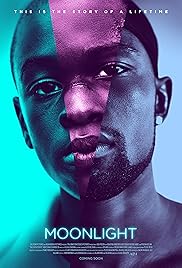
  2. Moonlight (2016)
  3. The Danish Girl (2015)
  4. Room (2015)
  5. Right Footed (2015)
  6. Manchester by the Sea (2016)
  7. Southside With You (2016)
  8. Once (2007)
  9. Dazed and Confused (1993)
  10. Brooklyn (2015)

Waking Life Poster
Waking Life (2001)


Best New Movie
I am typically pretty selective of the movies I go see in theaters, so as usual I didn't see a ton of films that were released this year.  However, I tried to seek out the ones that I was most interested in, and as such I think I've seen several of the very best.  I've included some films that were first released in 2015 but did not get a theatrical release in the US until this year (as noted).  These may not technically be 2016 films by some standards, but I put them on my list as they are being considered for this year's US award season.  Here are my top ten out of 15 new feature films I watched this year:
  1. Moonlight
  2. Manchester by the Sea
  3. Southside with You 
  4. The Lobster (2016 US theatrical release)
  5. Everybody Wants Some!!
  6. Knight of Cups (2016 US theatrical release)
  7. Hail, Caesar!
  8. Shifting Sands: On the Path to Sustainability
  9. Cafe Society
  10. Peace Has No Borders
Moonlight Poster
Moonlight     
Worst Watched
Since I can't resist, here are the five movies I saw this year that I liked the least.  None of these are terrible films, just ones that I didn't like much compared to the others (no offence).
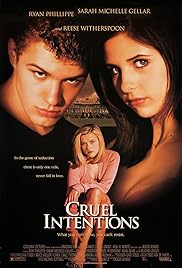
  1. Cruel Intentions (1999)
  2. The Neon Demon (2016)
  3. Forgetting Sarah Marshal (2008)
  4. Sleeping with Other People (2015)
  5. Anomalisa (2015)
Cruel Intentions Poster
Cruel Intentions (1999)

Television

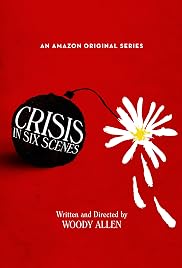
I'm not a big watcher of shows, at all, however occasionally I'll see something I'm interested in a stick to it.  This year there was one show (a miniseries, actually) that I watched all the way through, Woody Allen's Crisis in Six Scenes (released on Amazon this year).  Despite many negative reviews, it easily stands up to the rest of his work for me, and I highly recommend it.

Crisis in Six Scenes Poster
Crisis in Six Scenes
   

Music

Best New Album
2016 was not the best music year for me.  Few of my very favorite artists released new material and I struggled to find new albums and songs I really LOVED.  However, many of the artists I like that released new albums this year put forth pretty solid efforts, and some some pulled through with really great records.  My top two albums though were by bands I had never heard of before this year.  Here are my top 10 favorite 2016 albums (or EPs) out of a total of 29 that I listened to this year:

  1. City Club by The Growlers
  2. Born to Burn by Lake of Fire 
  3. Blackstar by David Bowie
  4. Day Breaks by Norah Jones
  5. PersonA by Edward Sharpe and the Magnetic Zeros
  6. Breakin' Point by Peter Bjorn and John
  7. June (EP) by Film School
  8. True Sadness by The Avett Brothers 
  9. Big Mess by Grouplove
  10. Peace Trail by Neil Young
Image result for city club the growlers
City Club by The Growlers 

Best New Album Cover
As album artwork is something that I greatly appreciate and find to be an important part of the record itself, here are my top favorite album covers from new albums I've listened to this year:

  1. City Club by the Growlers (see image above)
  2. Born to Burn by Lake of Fire
  3. Blackstar by David Bowie
  4. Blonde by Frank Ocean
  5. New Skin by CRX

Best Album Not From 2016

Though the majority of the albums I checked out this year were new releases, I did discover some older albums that I really loved.  Here are my top five favorites of these:

  1. Greendale (2003) by Neil Young and Crazy Horse
  2. Loaded (1970) by The Velvet Underground
  3. Graceland (1986) by Paul Simon
  4. Electr-O-Pura (1995) by Yo La Tengo
  5. Trashtopia (2015) by Soddy Daisy 
Image result for greendale neil young
Greendale (2003) by Neil Young and Crazy Horse

Best New Song
This year there was no real clear standout favorite new song for me.  However, there were many great ones, and going through some of the best I've come up with the following list of what are probably my top ten favorites.  If you follow me on Spotify, you can check out my playlist of these songs, titled Top Ten Songs of 2016. 
  1. I'll Be Around by The Growlers
  2. Welcome To Your Life by Grouplove
  3. Peace Trail by Neil Young
  4. OBLIVIUS by The Strokes
  5. One Dance by Drake featuring WizKid and Kyla
  6. With You Tonight by Summer Moon
  7. Angela by The Lumineers 
  8. Why? by Rooney featuring Soko
  9. June by Film School
  10. Fool You've Landed by Mumford and Sons featuring The Very Best and Beatenberg

I'll Be Around by The Growlers

Best Song Not Released in 2016
I didn't make a list of my top older songs that I discovered this year (that would be even more difficult to decide) but one in particular stands out."Oh! Sweet Nuthin'", the last track on The Velvet Underground's 1970 album Loaded is a soaring 7 minute anthem about the romance of having few material goods, and a perfect finish to Lou Reed's tenure with the band.  It also connects with me on a deep level.

Oh! Sweet Nuthin' (1970) by the Velvet Underground 
    
Things I'm Looking Forward to in 2017

2017 is already shaping up to be another great year for movies and music.  In particular, on the music side several of my very favorite artists have announced plans for or have hinted at new releases in the coming year.  If 2016 was perhaps a bit below average for my musical interests, 2017 looks to more than make up for the lull.  Here are the top ten likely releases I'm looking forward to seeing in the new year:

  1. New Arcade Fire album, likely to be released in late spring or early summer.
  2. New Real Estate album, likely to be released in the first half of 2017.
  3. Richard Linklater's new film, Last Flag Flying, currently slated for a 2017 release.
  4. Likely new album from Vampire Weekend.
  5. Likely new album from Los Angeles band Film School.  
  6. Terrence Malick's new Austin-music-scene drama, set for release on March 17.
  7. Alex Garland's new scifi-thriller, Annihilation, set for a 2017 release.
  8. Likely new music from MGMT.
  9. Debut album by The Strokes bassist Nikolai Fraiture's new band, Summer Moon. 
  10. Chris Nolan's new WWII drama, Dunkirk, set for release on July 19.

Arcade Fire warming up for a big 2017 at a festival in New Orleans in October. 


December 26, 2016

The Costs and Benefits of Drinking Milk

Image result for milk environmental impacts

The Following is a report I did for a class called Ecological Anthropology I took this past fall. The assignment was to pick a particular food product and research how it's produced along with the various negative impacts of its production.  As a note, I have not yet stopped drinking milk but plan to try switching to drinking soy milk in the next several weeks as the new year begins.


            If there’s been one trend in my dietary decisions as I’ve grown older it’s that, as I’ve become more conscious of the environmental and ethical costs of food production, I’ve moved steadily further away from consuming animal products.  For several years I was beginning to feel more and more guilty about eating meat, and finally, about a year and a half ago, I made the decision to become vegetarian. But I always knew that eating animal products other than meat still results in many of the same moral dilemmas, so since then I’ve found myself moving steadily towards becoming a complete vegan.  For now I like the idea of consuming animal products on occasion, instead of an everyday part of my diet.  But there’s one thing standing in my way: milk.  For as long as I can remember, I’ve consumed about 3 three glasses of skim milk a day, and cutting this out would be a major shift in my diet.  So before I make any big decisions, I thought it would be nice to look into just how much damage I’m doing by continuing this practice, as well as just how necessary drinking milk is. 
            I first though it necessary to gain some background knowledge on exactly how milk is produced.  Not too surprisingly, it involves a fairly straightforward process which begins with the rearing of cows which are kept in confined, close-quarter compounds, or sometimes allowed to roam grass fields.  The actual milking involves an automated machine that milks the cows twice a day or more.  The raw milk is then transported to processing factories where it is tested for safety and quality, then processing begins which includes pasteurization to kill bacteria, homogenization of fat throughout the rest of the milk, separation of the cream by centrifuge, then reintroduction to reach the desired fat content (skim milk has 0.05%).  Finally the milk is packaged and delivered to stores to be sold.1  Typically milk is produced close to where it is sold, due to its short shelf life.2  On the surface, this process doesn’t sound incredibly unethical, but I was unsurprised to discover that there’s much more behind the veil. 
            Like other forms of animal agriculture, milk production is highly resource intensive and carries many environmental risks.  Raising cows for milk requires large amounts of land, water, and energy.  This is largely in order to grow the feed necessary to fuel the animals’ high production.3  In the U.S., two-thirds of agricultural land is used for animal agriculture, including growing feed.4  Climate change inducing greenhouse gas emissions are also a staple of animal agriculture, resulting from energy expended from production processes, as well as digestive processes and manure of animals (although less than 1% of U.S. emissions are attributed to the dairy industry).5 There are also many environmental risks associated with milk production, including air pollution such as ammonia and water pollution from manure and fertilizer runoff.3
            Possibly a bigger concern for me, however, was with the treatment of cows in the milk production process, and my concerns were more than justified with this as well.  There are a whole host of incredible mistreatments of cows throughout the process.  The normal lifespan of a cow is about 20 years.  However, most cows in the dairy industry are kept in conditions (including cramped compounds where they are forced to stand in their own feces) that are so stressful and unsanitary that by 4 or 5 years old they are unable to continue with high levels of production, due to disease or other factors, and are sent away to be slaughtered.  The dairy industry is also intimately connected with the meat industry, including veal production which the males born to dairy cows are often used for.4
            As an additional factor, contamination during any part of the milk production process has been known to cause disease outbreaks on occasion.  Between 1998 and 2014, contaminated pasteurized milk resulted in 9 outbreaks in the U.S. with some total 2,200 illnesses.6
            So with all this in mind, is drinking milk really necessary?  Indeed the U.S. Department of Agriculture (USDA) recommends 3 cups a day of fat-free or low-fat milk.  Proponents argue that milk is an important source of calcium, potassium, and vitamins, and helps bone health.  However, some experts have shown skepticism, citing it as unnecessary for obtaining many desired nutrients, its high amount of calories and fat, and even possible connections with prostate and ovarian cancers.  There seems to be less than a consensus over whether milk is recommended, but it does seem clear that it’s not necessary for a healthy diet.  The same benefits from milk can be easily obtained from vegetables and other plant-based foods.7  One big concern I’ve had is with getting the protein that milk provides, however vegan diets have been shown to easily provide for this requirement as well.8
            With all this knowledge in mind, my head has become a bit clearer on how to address my milk dilemma.  It’s obvious that there are many serious costs of drinking milk, including both environmental and ethical.  One solution could be to seek out organic milk, which may include such benefits as grass fed cows and less fertilizer use.9  However, as stated above, milk is most likely not necessary to having a good diet.  If I were to cut out milk I could probably find a way to make up for it by consuming additional plant-based products that would provide me with the nutrients I may be lacking.  Soy milk, for example, which has good amounts of potassium, vitamins, and nearly as much protein as cow’s milk, could be an easy substitute.10  I don’t think I’ll cut out milk entirely just yet, but it seems clear that this is the direction that I, and anyone concerned with the negative impacts of drinking milk, should head in.                               

Sources 
1.      "How Milk Gets from the Cow to the Store." ProCon.org. April 4, 2011. http://milk.procon.org/view.resource.php?resourceID=000658.
2.      Segarra, Elizabeth. "How Far Does Our Food Travel." Save On Energy. September 4, 2015. https://www.saveonenergy.com/energy-news/how-far-does-food-travel-11404/.
3.      "Dairy." WWF. 2016. http://www.worldwildlife.org/industries/dairy.
4.      "Cow's Milk: A Cruel and Unhealthy Product." People for the Ethical Treatment of Animals. 2016. http://www.peta.org/issues/animals-used-for-food/animals-used-food-factsheets/cows-milk-cruel-unhealthy-product/.
5.      Capper et al.. "The Environmental Impact of Dairy Production: 1944 Compared with 2007." Journal of Animal Science 87, no. 6 (December 5, 2014): 2160-167. doi:10.2527/jas.2009-1781.
6.      "Outbreaks from Foodborne Pathogens in Milk and Cheeses Sold as Pasteurized, United States 1998-present." Real Raw Milk Facts. March 18, 2014. http://www.realrawmilkfacts.com/PDFs/pasteurized-dairy-outbreak-table.pdf.
7.      Jaret, Peter. "The Pros and Cons of Milk and Dairy." WebMD. 2011. http://www.webmd.com/diet/healthy-kitchen-11/dairy-truths.
8.      Mangels, Reed. "Protein in the Vegan Diet." The Vegetarian Resource Group. 2013. http://www.vrg.org/nutrition/protein.php.
9.      Schwendel et al.. "Invited Review: Organic and Conventionally Produced Milk—An Evaluation of Factors Influencing Milk Composition." Journal of Dairy Science 98, no. 2 (February 2015): 721-46. December 11, 2014. doi:http://dx.doi.org/10.3168/jds.2014-8389.
10.  Krans, Brian. "Almond Milk vs Cow Milk vs Soy Milk vs Rice Milk." Healthline. 2014. http://www.healthline.com/health/milk-almond-cow-soy-rice#2.

November 28, 2016

Assessing My Carbon Footprint

Related image

Note: The following is a report I did for a class I'm currently enrolled in titled Ecological Anthropology in which we were assigned to use an online calculator to find our carbon footprint and analyze our score.  


            At a time where the impact of human activity on the environment is increasingly finding its way into public awareness, it’s natural to reflect on our own lifestyles to see how much each of us is contributing to the problem.  An easy way to quantify our personal impacts is to estimate our carbon footprint, the amount of greenhouse gasses one is responsible for releasing.  With the number one environmental challenge of the day being the changing of our climate due to human release of greenhouse gasses, this can easily be seen as a general reflection of our personal impacts.  There are many readily available online calculators that can be used to conduct this assessment.  In an effort to review my own environmental impacts, I tried one of these calculators out. 

            The calculator I used was the The Nature Conservancy’s Free Carbon Footprint Calculator.[1]  I was asked to answer a variety of questions about my lifestyle among four categories: Home Energy, Driving and Flying, Food and Diet, and Recycling and Waste.  The system meanwhile calculated an estimate of the amount of greenhouse gasses I’m responsible for emitting per year in units of tons of CO2 equivalent.  My result?  Fourteen metric tons per year. 

            Of course, a particular value given for carbon footprint doesn’t mean a whole lot by itself, so I looked into some average carbon footprints for people of different parts of the world to see how I compare.  The good news is I seem to be responsible for less emissions than the average American who releases 19.86 metric tons of CO2 equivalent (tCO2e) per year, and far less than people in very rich countries who whose economies are based largely on fossil fuel production such as Kuwait (62.30 tCO2e).[2]  However, my footprint is significantly higher than the vast majority of people’s in the world.  The world average is about 5 tCO2e.[3] Some poor, less industrialized countries have almost negligible values, such as Burundi (0.30 tCO2e).  But even in China, a very highly industrialized county, people are responsible for significantly less emissions (8.13 tCO2e), due to distribution over their population size.     
    
            My high carbon footprint is certainly due to the fact that the US is more industrialized than most countries.  Additionally, I’m a product of a culture that is based on the use of huge amounts of energy, from powering our homes and electronics to fueling our transportation.  These are things that are hard for an individual like myself to get away from.  However, the fact that my footprint came in smaller than the average American suggests that I’m doing some things right.  The calculator lowered my total for several answers I gave, including being a vegetarian and regular recycling.  So it’s bothering to see that I’m still responsible for more emissions than much of the world’s population.  

            There are no doubt steps I could take to reduce my footprint further, however what my results illustrate is there is still a limit for how little impact I can have based on the society I live in.  For this reason, I’m less concerned with my own personal impact than the underlying systems that cause a society like the US to do so much harm to the environment.  Perhaps a better personal indicator could be how much each of us as individuals are doing to challenge these systems.                            


[1] The calculator I used was recently replaced by an updated system, and can no longer be found.  The new one only measures carbon footprint for an entire household, not for individuals.    
[2] All individual country data is 2012 values from the World Resource Institute’s CAIT Data Explorer. 
[3] The Nature Conservancy Free Carbon Footprint Calculator.  
Image source: https://r3continuum.com/2015/12/08/small-carbon-footprints/ 

January 16, 2016

Humanist Film Review: The Revenant (2015)


Director: Alejandro G. Iñárritu
Writers: Screenplay by Mark L. Smith and Alejandro G. Iñárritu, based on the novel by Michael Punke 
Stars: Leonardo DiCaprio, Tom Hardy      

The Revenant is a film about several different things. It's about willpower, it's about love, it's about loyalty, it's about man versus nature.  But most of all, it's a story about revenge.  The movie is a fictionalized account, based on real life events that happened to legendary nineteenth century frontiersman Hugh Glass, of a fur-trapping guide (DiCaprio) who is mauled by a grizzly bear, and then abandoned by members of his company who are supposed to be tending to him until he dies.  The man responsible for leaving him, John Fitzgerald (Hardy), also kills his son right in front of him while the crippled Glass watches powerless.  Glass then must, through incredible willpower and survival skills, somehow find a way to survive the harsh winter wilderness alone and gravely injured; and ultimately not only does this, but also sets out to track down Fitzgerald to get his revenge.

Normally, a revenge tale would not be of much interest to me.  The concept of "revenge" to me is just doing wrong for the sake of doing wrong; it doesn't fix anything in and of itself, but rather just causes more suffering.  And most of the time, films about revenge seem to reflect this.  However, as I began to learn more about The Revenant in the months leading up to its release, I eventually realized it would be a must see.  The main reason for this is the incredible cinematic experience it provides.  The film is not only engrossing and keeps you on the edge of your seat from start to finish, but it is also immersive and feels incredibly real.  This is due in large part to the filmmakers' dedication to absolute realism throughout most of the movie.  Shot on location in harsh winter wilderness in Canada and Argentina, and with all natural lighting, the setting looks stunning and feels completely real. The mark of master cinematographer Emmanuel "Chivo" Lubezki is keenly felt, particularly in the camerawork, often giving an uncanny feeling of being a spectator right within the action.  The film is also carried by a host of impressive performances, particularly from DiCaprio and Hardy.  DiCaprio finely executes the intensely physical demands of  his role, and Hardy acts and sounds more believably like a man from the 1820's than perhaps any other actor in the movie.  There are points where the story and the action stretches the boundaries of believability slightly, but overall the film remains rooted in realism and is an incredible cinematic achievement. 
                                   
Going into the movie, however,  I was still unsure of whether the film would go beyond the typical scope of most revenge stories and find something original to say.  To its credit, beyond the revenge thing, it does explore several humanist themes throughout.  The most prominent of these for me is the incredible power of the human will.  This is displayed through the character of Glass as you watch him overcome injuries that bring him near death, deadly forces of nature, and hostile enemies.  It would be nice to see a bit more insight into what is driving Glass to keep pushing on, but it's evident that he has a fire within him that will not be extinguished easily.  The most obvious answer is that he is motivated by a desire to not just survive, but also to get his revenge.  Though this may be true, I was happy that the ending managed to create a bit of an original twist on things.  Without giving away too much, I'll say that there is some ambiguity over whether Glass feels fulfilled by his efforts to avenge the wrongs that have been done on him.  This is summed up by an instance near the end, where Fitzgerald says to Glass something along the lines of "your boy ain't comin' back", and this seems to cause a change in Glass, though it's hard to tell exactly what.  Basically, the film lets you decide the ultimate result of Glass's journey. And it also makes you think a little bit about the morality and utility of revenge, something I can appreciate.

The Revenant is overall an incredible film. See it for the experience, but while you're at it think about the many themes it so keenly taps in to.            
  
Sources:
Image: http://www.fandango.com/movie-news/the-revenant-trailer-watch-leonardo-dicaprio-fight-a-bear-and-tom-hardy-749539
http://www.imdb.com/title/tt1663202/?ref_=nv_sr_1
http://www.imdb.com/name/nm0523881/?ref_=ttfc_fc_cr22